








Consumer-grade and professional-grade security cameras can look similar on a shelf, but they’re built for different jobs. Consumer cameras are designed for quick DIY setup. Professional cameras are designed to be installed, configured and supported by a trained installer, and to keep working reliably for years. Here’s how they compare, so you can decide what fits your home or business.
What Is the NDAA, and Why Do Installers Mention It?
The NDAA (National Defense Authorization Act) is a United States law that bans U.S. federal agencies from buying video surveillance equipment from certain manufacturers. It doesn’t apply to Canadian homeowners or businesses. You’ll still see “NDAA-compliant” on many professional camera spec sheets, because many manufacturers and installers use it as a simple benchmark for where equipment comes from. We install Uniview (UNV) cameras as an authorized Uniview dealer, and every Uniview camera we install is an NDAA-compliant model. If supply chain matters to you, ask your installer which brands they use and why.
Key Differences Between Consumer and Professional Cameras
Features and Capabilities
Image quality
- Consumer-grade: usually HD (720p) or Full HD (1080p), with basic low-light performance.
- Professional-grade: Full HD, 4K or higher, with better low-light performance, wider dynamic range and lenses chosen for the distance to be covered.
Durability and build
- Consumer-grade: often plastic housings, best for indoor or light outdoor use.
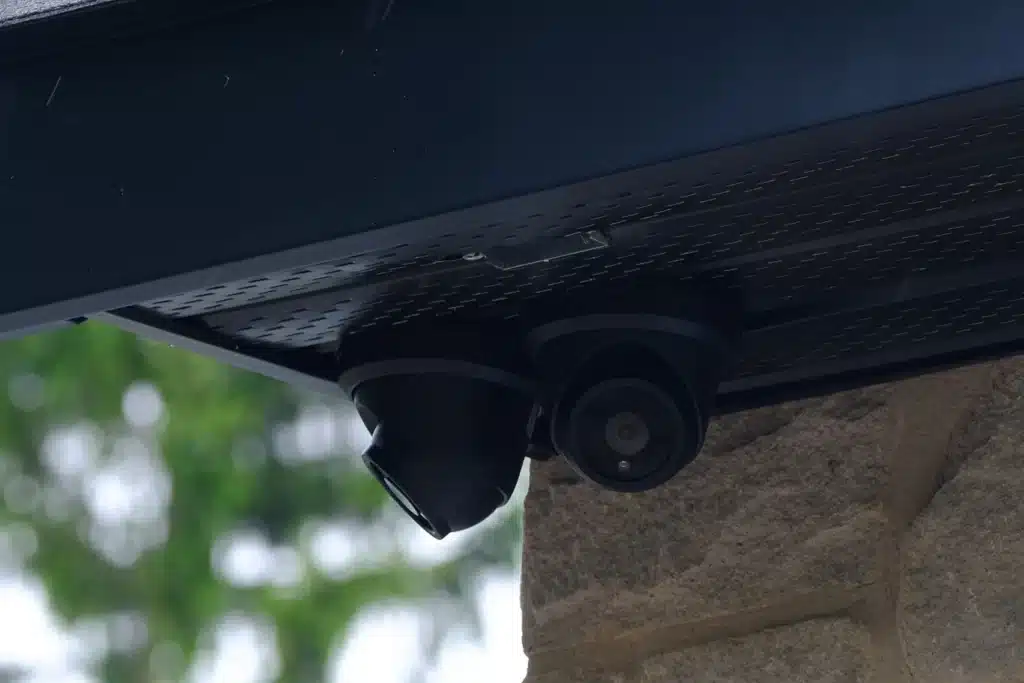
- Professional-grade: weatherproof and often vandal-resistant housings built for year-round outdoor use.
Installation and setup
- Consumer-grade: designed for DIY setup through an app.
- Professional-grade: installed and configured by a professional, with more mounting options and integration with other security systems.
Connectivity
- Consumer-grade: mostly Wi-Fi, which is easy to set up but can drop out or suffer interference.
- Professional-grade: usually wired with Power over Ethernet (PoE), for stable power and video over one cable. A properly set-up home or business network helps here.
Advanced Features
Analytics
- Consumer-grade: basic motion alerts.
- Professional-grade: smarter detection that can tell people from other motion, plus options such as facial recognition or licence plate recognition at gates for businesses that need them.
Storage
- Consumer-grade: SD cards or cloud plans, often with monthly subscription fees.
- Professional-grade: on-site recording to a network video recorder (NVR), with cloud storage options and easier searching of footage.
If you are planning on-site recording, our camera storage calculator can estimate the hard drive size. Our guide on how much storage security cameras need shows how to size an NVR for the footage you want to keep.
Integration
- Consumer-grade: basic smart home ecosystems such as Amazon Alexa, Google Home or Apple HomeKit.
- Professional-grade: integration with alarm systems, access control, video intercoms and building systems.
Reliability and Support
Reliability
- Consumer-grade: fine for casual monitoring. More prone to connection issues and wear.
- Professional-grade: built to run around the clock in demanding conditions.
Support
- Consumer-grade: online help articles and manufacturer phone lines.
- Professional-grade: installer support, warranties and someone local to call.
Why Many People Switch to Professional Cameras
A common story we hear is that someone started with a DIY camera, then ran into dropped connections, missed recordings or footage that wasn’t clear enough to use. Compare the proposed equipment, installation, support and any recurring costs. System design and placement should be planned around the areas you need to cover.
For a closer look at what to prioritize when choosing a system, see the top 3 things the best home security system cameras have in common.

How to Get Professional Security Cameras
Professional camera lines are generally sold through trained dealers and installers rather than retail stores. Working with a local installer means proper placement, a clean installation, a walkthrough of the app, and support after the job is done.
JR Security Solutions is based in Fergus, Ontario, and installs security cameras for homes and businesses across Wellington County, Waterloo Region, Hamilton and surrounding communities, from Fergus to Waterloo and Cambridge. Our own technicians are criminal record checked, WSIB covered and fully insured, and every installation is backed by our warranties and 100% satisfaction guarantee.
Making the Right Choice
If you only want to check on a pet or a front porch, a consumer camera may be enough. If you want reliable recording, clear images at night and a system that works with your alarm and access control, professional cameras are the better fit. Book a free on-site assessment or call (226) 400-2052, and see examples of our work in the gallery.